
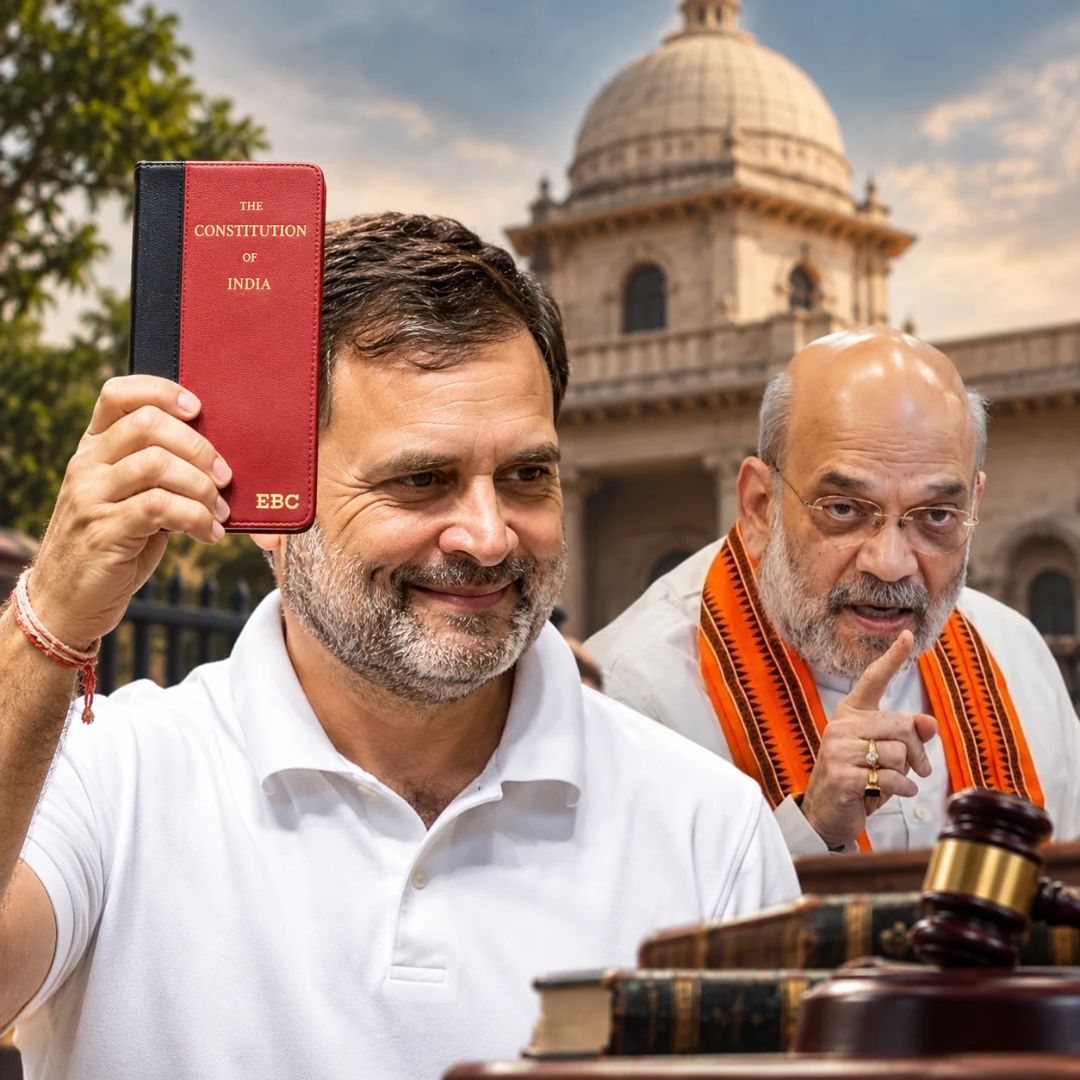
 AI Generated
Congress leader and Leader of the Opposition in the Lok Sabha, Rahul Gandhi, was acquitted by a special MP-MLA court in Sultanpur, Uttar Pradesh, on October 26, 2026, in a criminal defamation case concerning his 2018 remarks about Amit Shah, who was then the Bharatiya Janata Party (BJP) president. Additional Chief Judicial Magistrate Shubham Verma ruled that Gandhi’s remarks were not defamatory in nature.
The complaint was filed by BJP leader Vijay Mishra, who alleged that Gandhi’s comments damaged Shah’s reputation. Gandhi appeared before the court for the verdict, bringing the proceedings in this case to an acquittal. However, Mishra has indicated that he intends to challenge the decision after obtaining and examining the court’s written order, meaning the possibility of further legal proceedings remains.
Court Rules Remarks Were Not Defamatory
The case stemmed from remarks Gandhi made in Bengaluru during the campaign for the 2018 Karnataka Assembly elections. Referring to Shah, Gandhi reportedly said, “People in India forget that the president of BJP is a murder accused.” The statement referred to the Sohrabuddin Sheikh encounter case, in which a special Central Bureau of Investigation (CBI) court had discharged Shah in 2014. Mishra, a local BJP leader and former chairman of the Sultanpur District Cooperative Bank, filed the complaint on August 4, 2018, under Sections 499 and 500 of the Indian Penal Code, which dealt with criminal defamation and its punishment.
He alleged that Gandhi’s remarks were objectionable and harmed Shah’s reputation. After hearing the case, the Sultanpur court acquitted Gandhi, holding that the remarks were not defamatory in nature. The detailed reasoning behind the ruling should be assessed from the written judgment rather than inferred from the brief findings reported so far.
An Eight-Year Legal Battle
The complaint moved through several stages before reaching the verdict. Gandhi appeared before the Sultanpur court in February 2024 and secured bail. During the proceedings, Mishra sought a comparison of Gandhi’s voice sample with a recording of the Bengaluru speech. The trial court rejected the application, and subsequent challenges before the sessions court and the Allahabad High Court were also unsuccessful. The court initially scheduled the verdict for October 13, 2026, before postponing it to October 26.
Following the acquittal, Mishra’s lawyer, Santosh Pandey, confirmed the outcome. Mishra has indicated that he plans to obtain the certified copy of the judgment, consult his lawyer and consider an appeal. The verdict therefore settles the complaint at the trial-court level for now, but further legal action remains possible. The case also needs to be distinguished from other defamation proceedings involving Gandhi, as each has its own facts and legal outcome.
The Logical Indian’s Perspective
Political criticism is essential to democracy, allowing citizens and elected representatives to question those in power and scrutinise public conduct. At the same time, public figures retain the right to seek legal remedies when they believe their reputations have been harmed. This case underlines the importance of examining contested statements through evidence, fair hearings and due process rather than political allegiance or public sentiment. The acquittal is a judicial decision in a specific complaint, not a blanket endorsement of every statement made during political campaigns.
If an appeal follows, the legal process must continue to be guided by evidence and fairness. A healthy democracy needs space for robust disagreement without allowing political differences to undermine mutual respect or the rule of law. How can India protect the right to question those in power while ensuring that political debate remains responsible and grounded in facts?
For More News Updates Follow Us On www.tconews.in