 Ai Generated
Following recent demonstrations at Jantar Mantar, the Delhi Police issued an advisory directing journalists covering public protests to visibly display official press identification cards and maintain a designated distance from operational police cordons.
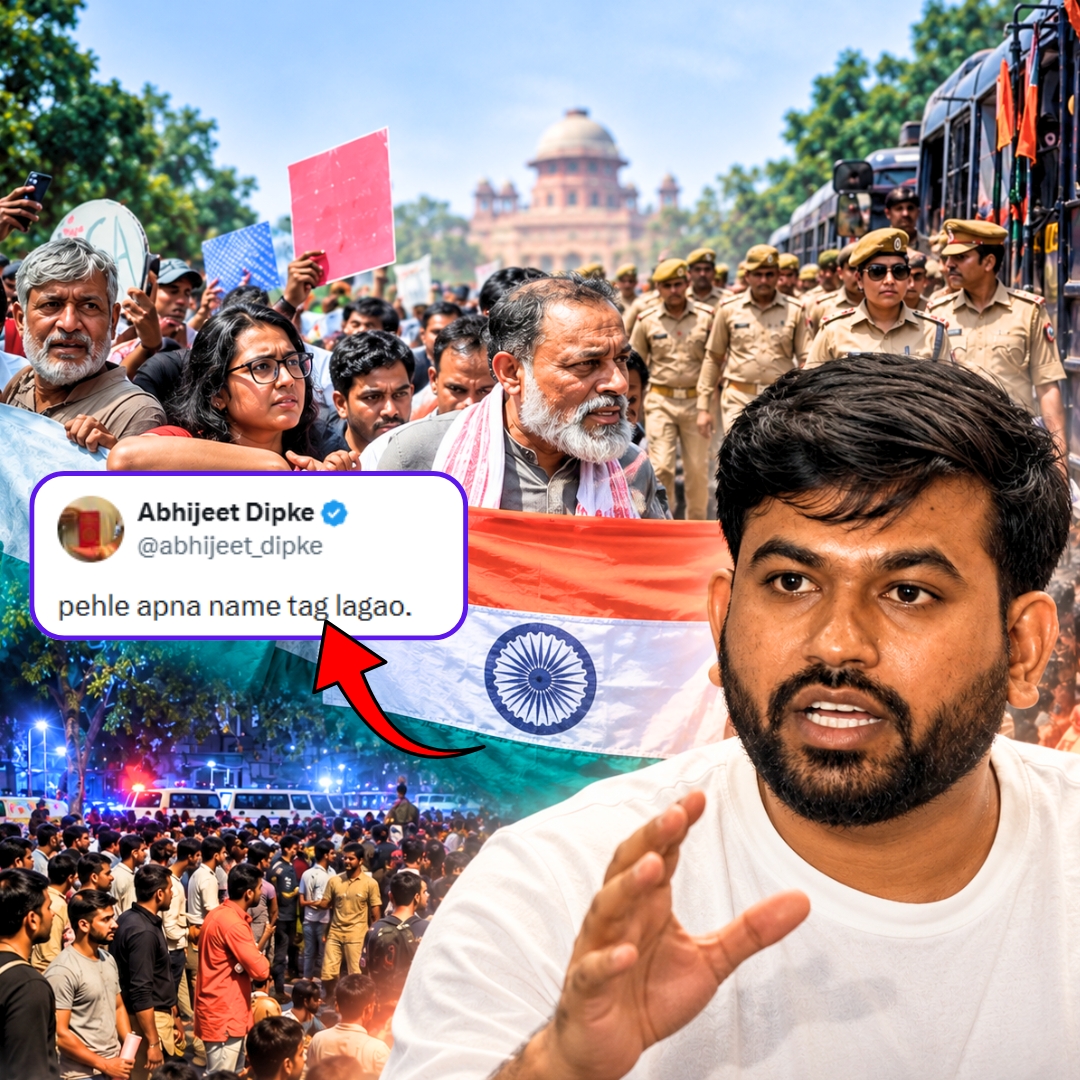
The directive, described by law enforcement officials as a safety and crowd-management measure to distinguish bona fide reporters from demonstrators, prompted sharp backlash from youth leaders and civil society activists. Cockroach Janta Party (CJP) founders Abhijeet Dipke and Ashutosh Ranka took to social media to criticise the order, responding with ‘Pehle apna name tag lagao’ (First wear your own name tags). The retort highlights mounting public scrutiny over personnel deployed without standard visible identification badges, alongside ongoing concerns regarding media freedom and safe access during public demonstrations.
Scrutiny Over Identification
Discover moreIndian Current AffairsDaily News UpdatesRead Newspapers
According to police representatives, the advisory is intended to streamline security operations and safeguard media personnel from being caught in scuffles during volatile crowd-control actions. However, media workers and activists argue that selective enforcement exposes ground reporters to intimidation while shielding enforcement officers from scrutiny.
Reacting directly to the advisory, Abhijeet Dipke wrote, “Pehle apna name tag lagao,” whilst Ashutosh Ranka pointedly remarked that police personnel frequently operate without visible nameplates during demonstrations, making accountability nearly impossible. Activists highlighted that while reporters routinely carry accreditation, several ground units deployed across central demonstration hubs have increasingly operated without mandatory service tags, blurring standard protocols of transparent public policing.
Simmering Tensions
The exchange comes amidst a series of demonstrations that have gathered momentum across the national capital since 2 October.
Protests organised by youth groups, student unions, and civil rights organisations at Jantar Mantar have witnessed heightened police deployment, detentions, and scuffles. Police officials previously cited officer safety and the risk of online harassment as reasons why some personnel skipped displaying visible badges in volatile environments. Conversely, media advocacy bodies and student groups have raised alarm over instances where credentialed reporters were detained or impeded during crowd-dispersal drives, raising vital questions over institutional transparency and the legal rights of working journalists under Article 19(1)(a).
The Logical Indian’s Perspective
In a vibrant democracy, the free press acts as the public’s eyes and ears, whilst law enforcement functions as the guardian of civil safety. These two pillars must coexist on a bedrock of mutual respect, transparent procedure, and institutional accountability.
Discover moreTrack FlightsFollow StarsBreaking News Alerts
Requiring journalists to carry credentials is not inherently unreasonable; however, demanding complete transparency from the press while law enforcement officers conceal or omit their own name tags erodes public trust. Meaningful dialogue and non-violent assembly can only thrive when those in uniform lead by example, upholding the very laws of accountability they are sworn to enforce. If state personnel remain untraceable during public clashes, how can ordinary citizens and journalists feel safe enough to hold power to account? Do you think mandatory, visible identification for all on-duty police personnel is essential to protect constitutional freedoms on our streets?
For More News Updates Follow Us On www.tconews.in