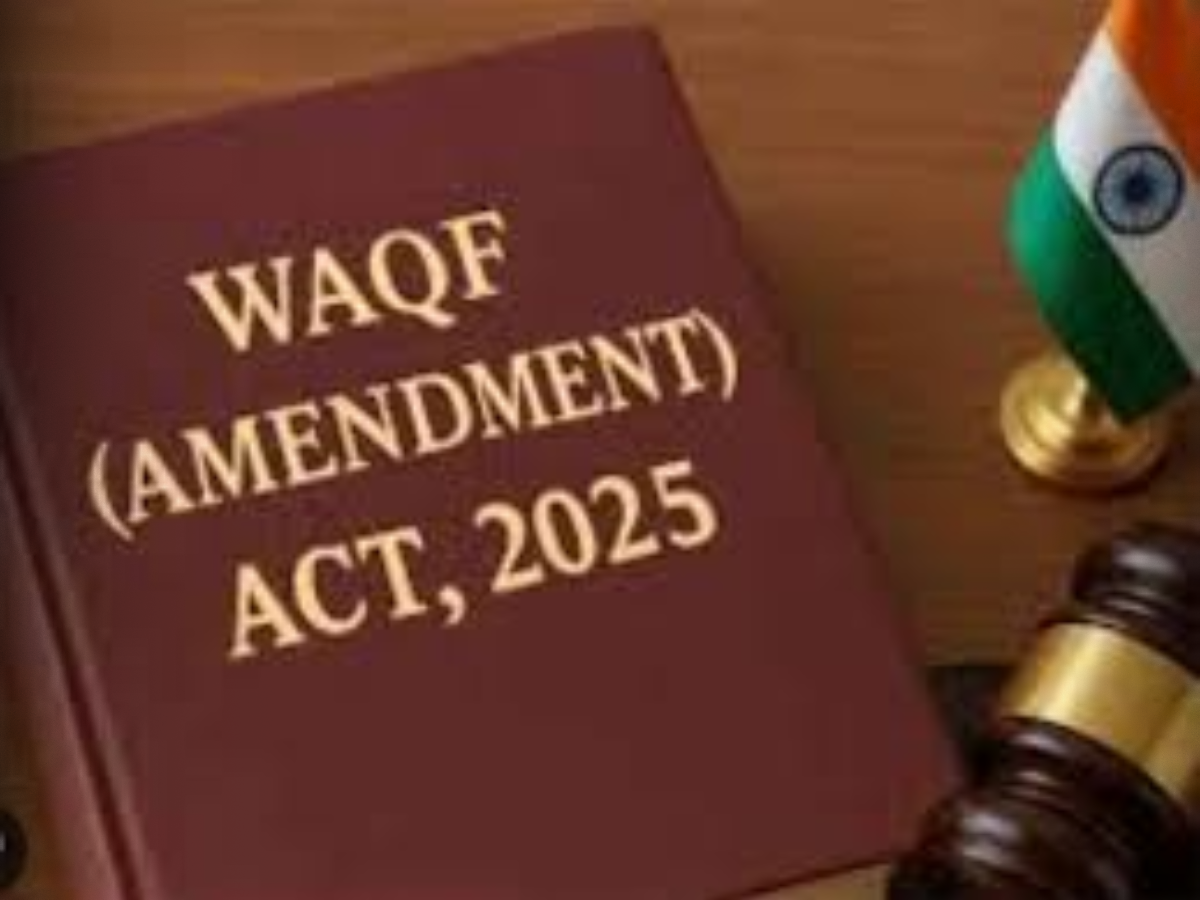
Madhya Pradesh has sparked a nationwide protest after becoming the first state to reconstitute its Waqf Board under the newly amended Waqf law. This decision was approved by Chief Minister Mohan Yadav’s government, and it has drawn widespread attention after the appointment of two Hindu members to the 10-member board. The state government has issued an official notification in the Madhya Pradesh Gazette, and it becomes the first state to implement the updated framework after the amended Waqf Act received presidential approval on April 5 last year.
Why Has the Hindu Appointment Led to Protests?
The inclusion of Hindu members has faced opposition from sections of the Muslim community. Members of the All India Muslim Teohar Committee (AIMTC) organised a protest at Budhwara Chowk in Bhopal, questioning the government’s decision. AIMTC chief Shamsul Hasan has argued that religious boards connected to Hindu temples have not traditionally included Muslim representatives, and has raised questions about why Hindu members were added to the Waqf Board. Congress MLA from Bhopal, Arif Masood, also criticised the move and stated that he would challenge the decision in the Supreme Court.
Who Are the New Members of the Madhya Pradesh Waqf Board?
Sanwar Patel has been appointed as the Chairman of the Madhya Pradesh Waqf Board. The two Hindu members included in the newly formed board are Manoj Malpani from Indore and Animesh Bhargava from Raghogarh in Guna district. Other members of the 10-member board include former Union minister Najma Heptulla from New Delhi, Bhopal North MLA Atif Aqueel, Faizan Khan from Ujjain, Sister Fatema Choudhary from Indore, Berasia councillor Shaista Sultan, and Ratlam councillor Shabana Khan. The Commissioner of Backwards Classes and Minority Welfare has also been included as a board member. In the new and updated provisions of the Waqf Act, the state government has exercised powers under Section 13(1) and formed the board as per Section 14 of the amended legislation.
A New Chapter in Waqf Administration
According to the Madhya Pradesh government, the reconstitution shows the implementation of the amended Waqf Act and aims to bring the new provisions into effect. Supporters view the inclusion of members from different communities as a step towards broader representation. However, critics of the updated Act believe that it changes the traditional structure of Waqf administration. The controversy shows a larger debate over religious institutions, representation and the future management of Waqf properties in India.
What Is the Waqf Board and Why Does It Matter?
A Waqf refers to a religious or charitable endowment made under Islamic traditions. These properties are usually dedicated for purposes such as building mosques, educational institutions, hospitals, and other community services. A key feature of Waqf property is that it is considered inalienable, meaning it cannot normally be sold, transferred, inherited, or used as collateral. Waqf Boards are responsible for managing these properties and ensuring they are used according to their intended charitable or religious purposes.
For More News Updates Follow Us On www.tconews.in