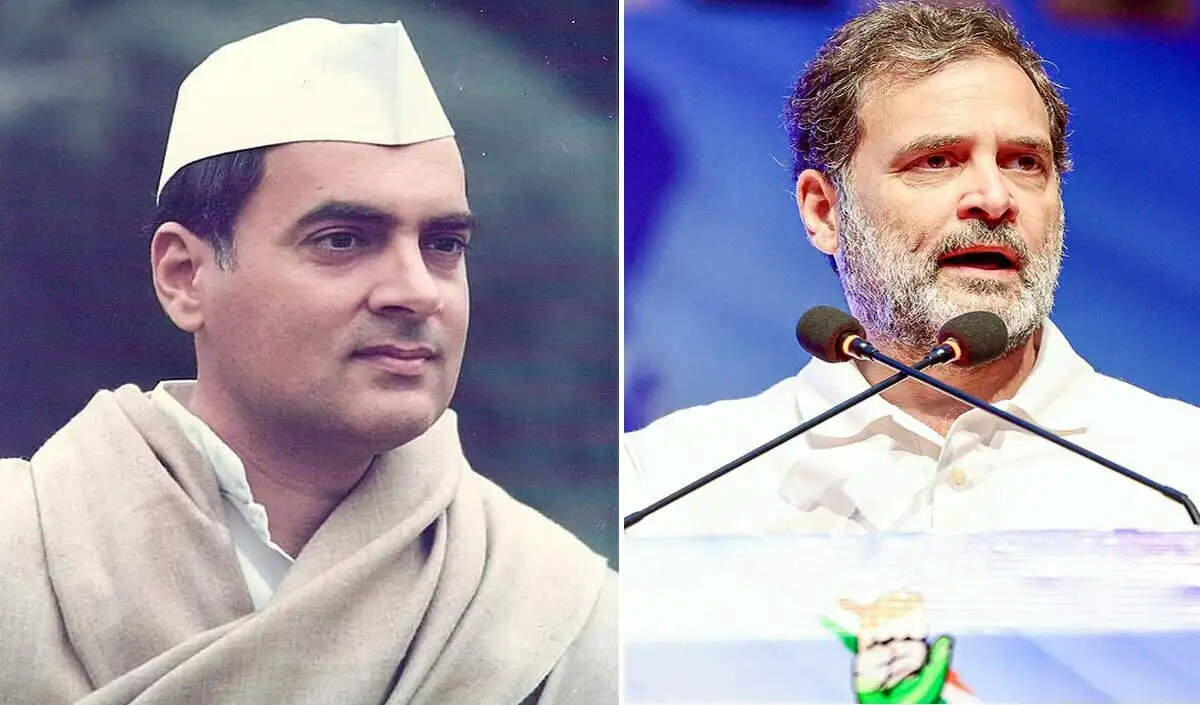
The political landscape in Karnataka is witnessing a significant shift as Rahul Gandhi navigates challenges reminiscent of his father Rajiv Gandhi's era. With the potential removal of Chief Minister Siddaramaiah and the rise of D.K. Shivakumar, concerns about social alliances and electoral strategies are at the forefront. The acceptance of a crucial caste survey report adds complexity to the situation, as it could either strengthen or weaken the Congress party's standing among various communities. This transition is not just about leadership; it poses a critical test for the party's future direction and Rahul Gandhi's political credibility on a national scale. Discover how these developments could reshape Karnataka's political future.
Historical Parallels in Karnataka Politics
In Karnataka's political arena, Rahul Gandhi appears to be repeating a significant mistake made by his late father, former Prime Minister Rajiv Gandhi, decades ago. Rajiv Gandhi's decision in 1990 to abruptly remove Chief Minister Veerendra Patil caused considerable damage to the Congress party's social and political standing in the state. Now, as Rahul Gandhi seems to be following a similar path, concerns are rising within the Congress leadership regarding the potential repercussions of such a move.
The incident involving Veerendra Patil is still regarded as a crucial lesson for the Congress party. In 1990, the party leadership unexpectedly dismissed Patil, who was seriously ill, leading to a public announcement by Rajiv Gandhi at the Bengaluru airport. The Lingayat community perceived this as a significant affront to one of their most respected leaders, resulting in a gradual distancing from the Congress party and paving the way for the rise of the BJP in Karnataka. Today, with the potential removal of Chief Minister Siddaramaiah and the elevation of Deputy Chief Minister D.K. Shivakumar, the Congress faces a similar challenge.
Concerns Over Leadership Changes
Political analysts believe that Siddaramaiah's removal could echo the past, raising fears that such a leadership change might incite discontent among major social groups. For months, Siddaramaiah had indicated he would step down only at Rahul Gandhi's request. Reports suggest that Gandhi has now asked him to clear the way for his successor, leading to Siddaramaiah's resignation. This decision is not merely about changing leadership; Siddaramaiah has been a prominent figure representing backward classes, Dalits, and minorities through the 'AHINDA' coalition, which is considered Congress's strongest electoral asset.
If the perception arises that Siddaramaiah was removed mid-term under orders from Delhi, it could send a negative message to AHINDA supporters. On the other hand, D.K. Shivakumar is seen as a key leader of the Vokkaliga community and enjoys the trust of the Gandhi family. Thus, Congress must balance empowering a strong organizational leader while keeping its crucial social base satisfied.
The Implications of the Caste Survey
Siddaramaiah's final political act before stepping down further complicates the situation. He accepted the long-awaited caste survey report from the Karnataka State Backward Classes Commission, which has been pending for years and is deemed vital for understanding the state's social structure. Previous governments had hesitated to act on this report due to fears of alienating influential communities like the Lingayats and Vokkaligas.
This survey is significant as it provides a comprehensive assessment of the social and economic status of backward classes, Scheduled Castes, Scheduled Tribes, and other communities. The findings suggest that the population of backward classes may surpass that of traditionally dominant castes. Siddaramaiah's AHINDA politics has been rooted in this social reality, and the report strengthens his political perspective with data.
Challenges Ahead for D.K. Shivakumar
D.K. Shivakumar now faces a daunting challenge. If his government implements the report or makes decisions based on it, it could provoke backlash from influential communities. Conversely, ignoring the report could lead to discontent among AHINDA groups, whom Siddaramaiah has worked hard to align with Congress. Thus, Siddaramaiah leaves behind a complex political puzzle for his successor.
The implications of this situation extend beyond Karnataka. Rahul Gandhi has long championed caste enumeration as a central issue of social justice, arguing that accurate social data is essential for equitable representation and targeted welfare policies. If the Congress government in Karnataka fails to act on this report, it could undermine Rahul Gandhi's political credibility on a national level, providing the opposition with an opportunity to claim that Congress advocates for caste enumeration but hesitates to implement it in states where it holds power.
A Quiet Transition Amidst Political Tensions
Despite the potential for significant political conflict, the process of sidelining Siddaramaiah appears to have been conducted relatively smoothly. Nevertheless, he has maintained his political influence. By advancing the caste survey report and prioritizing issues related to backward classes, minorities, and Dalits, Siddaramaiah has an opportunity to reinforce his social base. Furthermore, as he has expressed a desire to remain active in state politics rather than move to the Rajya Sabha, it is anticipated that he will continue to play a significant role in future political developments.