
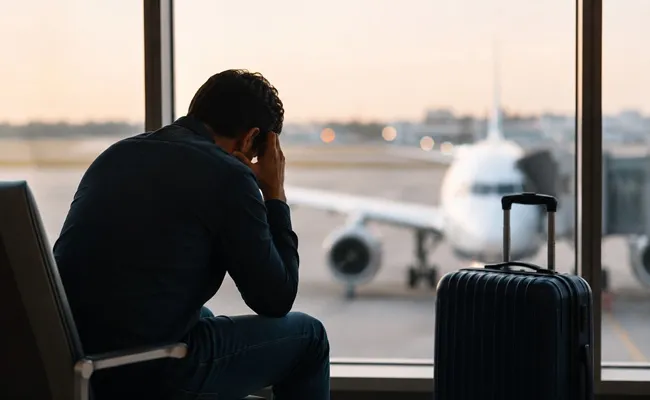
An immigration law firm has criticised the US State Department over reports that long-term H-1B visa holders are being prevented from returning to the United States after travelling abroad for family medical emergencies.
Banias Law, an immigration litigation firm, described the situation as “heartbreaking” in a post on X.
The firm said some H-1B workers travel to their home countries to support seriously ill family members, only to face visa delays or re-entry problems that prevent them from returning to their jobs, homes and families in the United States.
It accused the State Department of acting in bad faith and claimed that the problem had worsened following the US Supreme Court’s 2024 ruling in Department of State v. Muñoz. However, the firm did not provide details of specific cases.
In the Muñoz case, the Supreme Court ruled that a US citizen does not have a fundamental constitutional right to have a non-citizen spouse admitted into the country. The decision also strengthened the government’s protection from court challenges involving consular visa decisions.
The issue has become a major concern for H-1B professionals, particularly Indians, who may need to travel urgently due to family illnesses or deaths.
One Indian couple reportedly hesitated to travel to India even though the wife’s mother was suffering from advanced cancer. They feared that visa-stamping delays could prevent them from returning to the US and place their jobs at risk.
H-1B workers who leave the country may need to attend a visa-stamping appointment at a US consulate before returning. Additional social media screening and administrative processing can make the timeline uncertain.
The controversy comes at a time when US immigration rules are becoming stricter and the political debate over legal immigration is intensifying.
Banias Law has repeatedly raised concerns about H-1B visa fees, immigration enforcement policies, biometric procedures and delays faced by skilled foreign workers.
In another recent case, an H-1B visa holder said his visa was revoked after he failed to pay a $600 traffic fine before a court-imposed deadline. He later expressed regret over not paying the penalty on time.
The immigration debate has also expanded beyond employment visas to birthright citizenship.
President Donald Trump recently said he would ask the US Supreme Court to reconsider its ruling that struck down his attempt to restrict birthright citizenship.
The court ruled on June 30, 2026, that children born in the United States are generally entitled to citizenship under the Fourteenth Amendment, including those born to undocumented immigrants and temporary visa holders.
Trump’s executive order sought to deny automatic citizenship to certain children unless at least one parent was a US citizen or lawful permanent resident.
The Supreme Court rejected that approach, reaffirming the long-standing interpretation of birthright citizenship. Trump has described the ruling as unjust and said he plans to seek a rehearing, though such requests are rarely granted.
The developments reflect growing uncertainty for immigrants in the United States, including highly skilled H-1B professionals who may now think twice before travelling abroad, even during serious family emergencies.
For More News Updates Follow Us On www.tcoews.in