
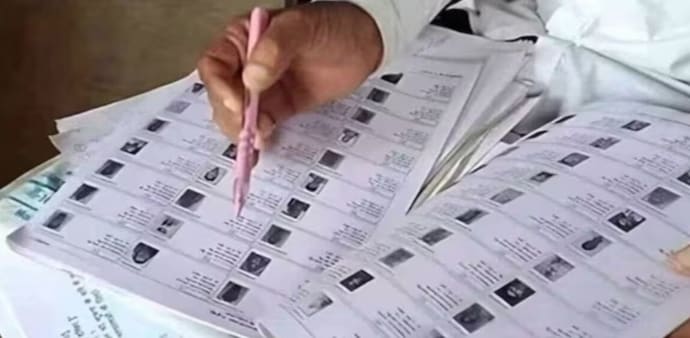
 Surjit Bhalla cites estimates suggesting that India's electoral rolls already had a substantial registration gap before the latest revision exercise.
The deletion of an estimated seven million names from electoral rolls has intensified the debate over voter exclusion and the Election Commission of India's (ECI) Special Intensive Revision (SIR) exercise. However, economist Surjit S Bhalla argues that the figures need to be examined in the context of India's electorate, demographic changes and the reasons behind the deletions.
in an opinion article published in The Indian Express, Bhalla contends that the number of names removed from electoral rolls cannot, by itself, establish claims of mass disenfranchisement. The key question, he argues, is how many of those deleted were eligible voters who were wrongly excluded, rather than people whose entries were removed for legitimate reasons such as death, migration or duplication.
The central question, therefore, is not simply how many names have been removed, but how many belonged to eligible voters who should have remained on the electoral rolls.
Seven million deletions need demographic context
Bhalla argues that electoral roll revisions must account for deaths, migration, duplicate registrations and adults who have never registered to vote. He contends that figures cited during the controversy need to be evaluated against estimates of India's adult population and the number of people legitimately absent from electoral rolls.
In his assessment, treating every deletion as evidence of disenfranchisement risks conflating legitimate removal of ineligible entries with wrongful exclusion. At the same time, determining whether the exercise has been conducted fairly requires examining the reasons for individual deletions and the safeguards available to affected voters.
The distinction is important because the total number of names removed does not, by itself, establish how many eligible voters have been denied their right to vote.
What do the numbers say about voter registration?
Bhalla cites estimates suggesting that India's electoral rolls already had a substantial registration gap before the latest revision exercise.
Referring to the 2024 Lok Sabha elections, he notes that the Election Commission's own Special Intensive Revision data for the 2024 Lok Sabha election, one in four Indians aged 18 to 29, or 73 million young people, were not registered.
He also draws on population estimates based on the last Census, official birth and death rates, and adjustments for COVID-19 deaths and emigration. These estimates, he argues, provide a basis for assessing the size of India's adult population and the extent of under-registration.
Such estimates, however, need to be compared with verified electoral data to establish the number of eligible adults missing from the rolls. Population estimates and electoral registration figures measure different things and cannot, on their own, determine whether specific deletions were justified.
Why the reasons for deletion matter
The debate over SIR has raised questions about whether the revision process adequately distinguishes between deceased voters, people who have migrated, duplicate entries and eligible citizens whose details could not be verified.
Bhalla argues that the final electoral rolls are more meaningful than draft-stage figures when assessing the outcome of the exercise. A comprehensive evaluation would also require information on applications for inclusion, rejected claims, successful appeals and names restored after verification.
For voters, the practical concern is whether correction mechanisms are accessible and whether eligible citizens have sufficient opportunity to challenge their removal before elections.
Transparency remains central to electoral integrity
Bhalla criticises the Opposition's response to the revision exercise, arguing that allegations of mass disenfranchisement require evidence. However, establishing the accuracy of the electoral rolls also depends on transparent data, clear explanations for deletions and effective grievance-redressal mechanisms.
The ECI's publication of state-wise deletion figures, reasons for removal and the outcomes of appeals would help establish whether the exercise has improved electoral roll accuracy without excluding eligible voters.
Ultimately, the seven-million figure should be treated as a starting point for scrutiny rather than proof of either widespread disenfranchisement or an entirely error-free revision. The decisive measure is how many eligible voters were wrongly excluded and whether the electoral system provides an effective remedy.
For More News Updates Follow Us On www.tconews.in