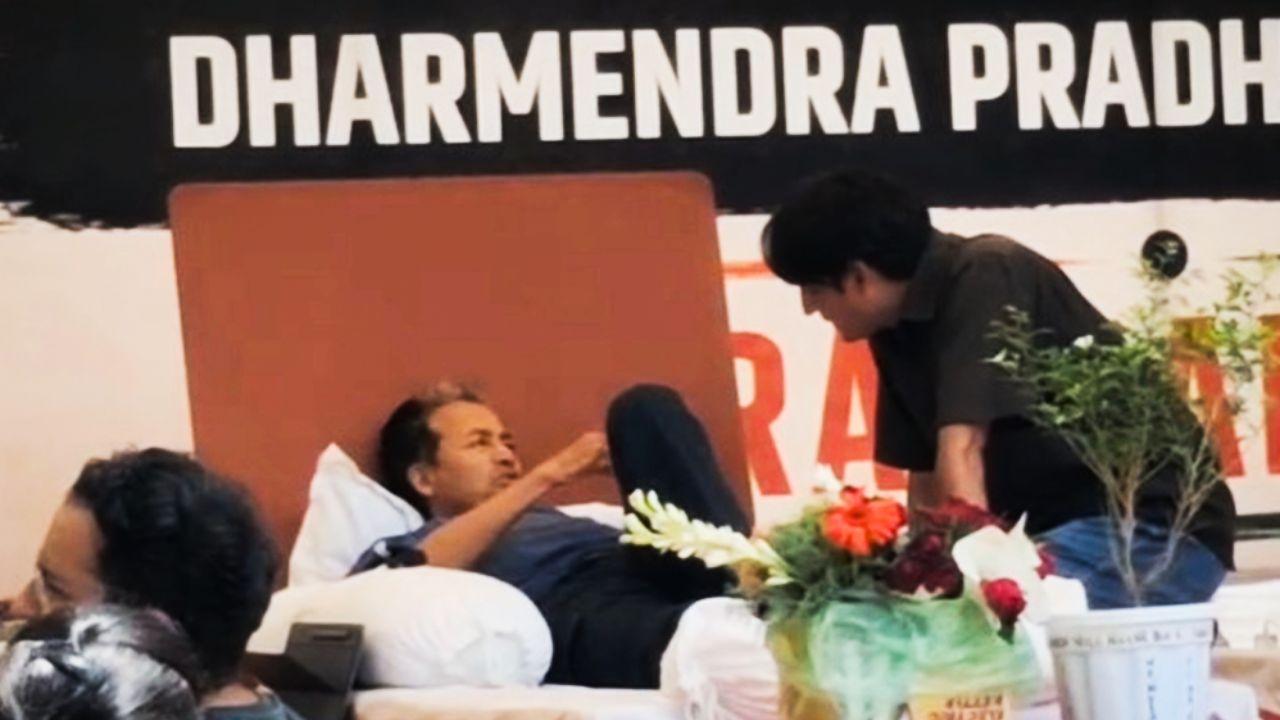
Sonam Wangchuk's health condition is worsening.
Cockroach Janta Party protest has reached a point where it cannot be naively considered just another protest at Delhi's Jantar Mantar. A student movement demanding accountability for alleged NEET-UG 2026 malpractices has morphed into a broader debate on how the government reacts to citizen protests.
The key question for today is not whether the protesters' demand is righteous or not. It is whether the government would still keep its silence while the health of internationally acclaimed educationist and climate activist Sonam Wangchuk continues to wane.
Can the Government Ever Ignore a Protest That Grows?
In an attempt to bring about educational reforms as well as justice after the NEET upset, CJP founder Abhijeet Dipke and thousands of supporters have asked for Union Education Minister Dharmendra Pradhan's resignation over the NEET irregularities.
However, for the past 25 days no official communication between the Union government and the protesters has taken place. The silence has become the new topic for conversation.
The latest medical update on Sonam Wangchuk is alarming to a serious level. Organisers say he has lost more than eight kilograms during his hunger strike. His blood sugar levels have repeatedly dropped below normal levels. He is said to be suffering from severe weakness and dizziness, and his muscles have been deteriorating.
Wangchuk has said that he will continue until meaningful action is taken. He told a press conference Saturday, "I'm weak from the outside, but I'm strong from inside". But what will happen once he is weakened to the point where he cannot continue?
Why Has the Opposition Stepped In While the Government Stays Away?
Numerous opposition-party leaders and civil society members have come to the site of the protest, signalling solidarity with students and levying allegations against the government on Wangchuk's health. The opposite of this is that several public figures have called for him to end his fast.
Dharmendra Pradhan has called the CJP and its supporters a "B-team of disruptive elements" and refused to shake off rumours of his resignation.
Is Silence Helping or Hurting?
Governments have the right to disagree with protesters. But democracy obliges governments to listen, especially when a non-violent movement draws attention across the country and focuses on the future of young people.
Opening a dialogue is not an admission that every demand is correct. It is an acknowledgement that the public has a right to be heard.
With Wangchuk’s health declining and the CJP plotting a march towards Parliament to step up its agitation, how the government responds next will be important. The longer the government stays silent, the larger the political and moral questions are likely to be.
For More News Updates Follow Us On www.tconews.in